Skip to content
POURCRAFT BAR

ICED COFFEE

Cold Brew Concentrate

One part coarse coffee to five parts cold water by weight, steeped overnight and diluted to order.

  • 5Cold water83%500 g
  • 1Coarse coffee17%100 g
Ice
Standard cubes
Glass
Bottled as a base; served in a 12 oz glass
Serves
8

Ingredients

Batch size

8 servings
  • 100 gcoffee, ground coarse — the texture of raw sugar, not of table saltSwap: Pre-ground coffee sold as coarse or French press grind
  • 500 gcold filtered water (about 2 cups)
  • 4 ozcold water or milk per glass, at serving time

Method

  1. Weigh, do not scoop

    Coffee scooped by volume varies by a third depending on grind and how it settled in the bag. On a brew this long, that difference is the whole gap between a concentrate that tastes round and one that tastes thin.

  2. Wet every ground

    Pour the water on in two goes and stir gently after each. Dry pockets in the middle of the bed simply do not extract, and you end up with a weak brew made from the same amount of coffee you paid for.

  3. Steep cold

    16 hours refrigerated, or about 12 at room temperature

    Cover and leave it in the refrigerator. Steeping at room temperature is faster but the window between under and over is much narrower, and the refrigerator is where the finished concentrate is going anyway.

  4. Strain coarse first

    A fine mesh sieve takes out the bed in one pass. Going straight to paper puts all the work on the filter, which then clogs and takes an hour.

  5. Strain again through paper, and do not press

    10–15 minutes, unattended

    The second pass takes out the fine sediment that makes cold brew taste chalky on the second sip. Pressing the filter to speed it up pushes exactly that sediment through.

  6. Bottle it, dilute at the glass

    Store it at full strength and cut it one to one with cold water or milk when you pour. Diluting the whole batch commits you to one strength and takes up twice the refrigerator space.

The one thing that ruins it

Grinding it as fine as drip coffee. Fine grounds over-extract across a sixteen-hour steep, and no amount of dilution afterward takes the woody, drying bitterness back out.

Tools you actually need

If you need one

01Fits the most drinks
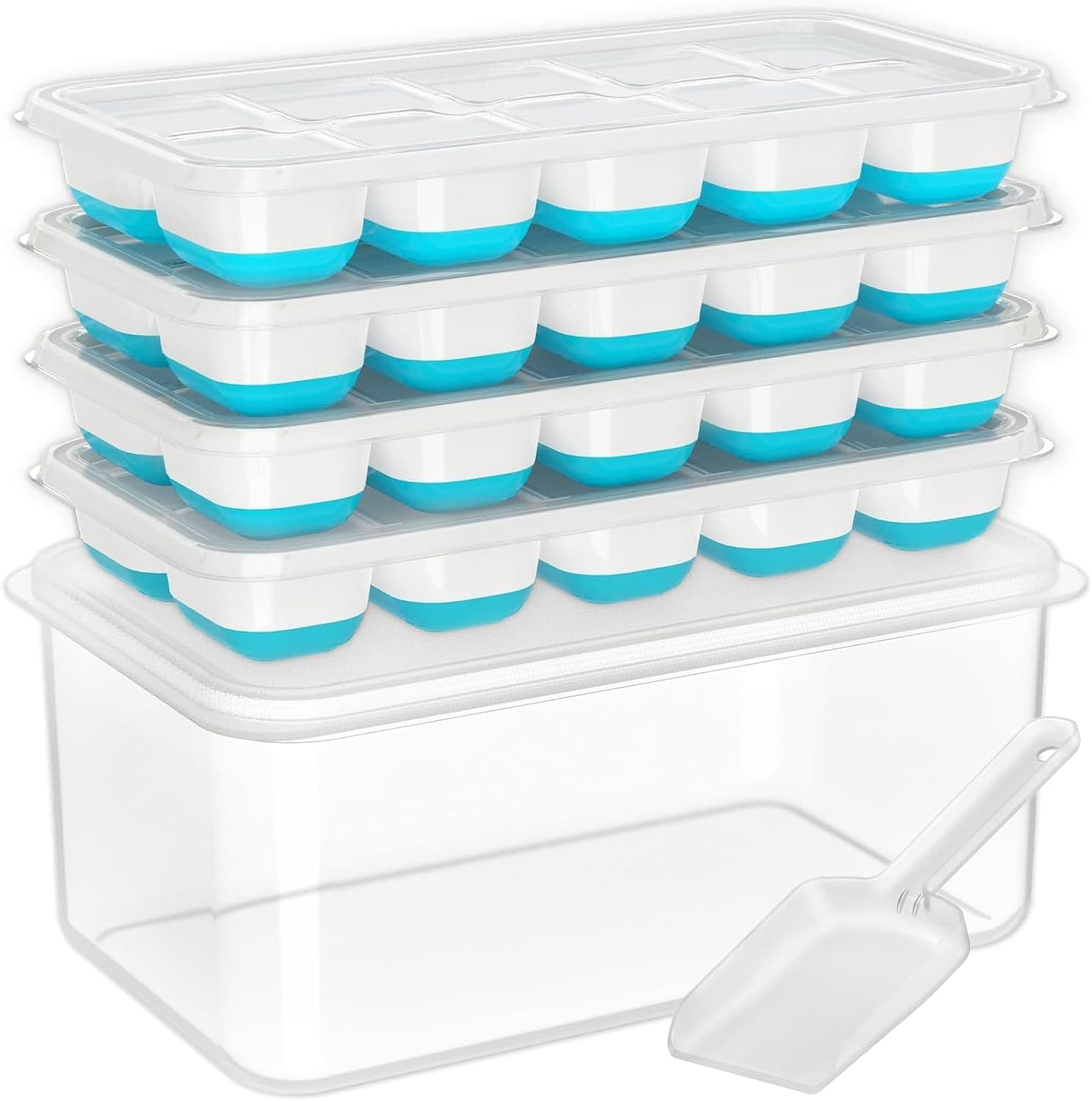
DOQAUS Ice Cube Trays with Lid & Bin, 4-pack

DOQAUS

DOQAUS Ice Cube Trays with Lid & Bin, 4-pack

Four silicone trays with lids plus a bin and scoop, producing the standard cube that ten of the eighteen recipes on this site call for — more than large cubes and pebble ice combined, and eleven once you count the iced latte that takes either. Four trays plus a bin is also what makes a rotation possible, and freezing time rather than tray count is the real constraint on a home bar.

Best for
The default ice for this site — iced coffee, tea, lemonade, sodas, agua fresca
Key spec
Silicone, stackable with lids, bin and scoop included
  • Standard cubes suit ten of the eighteen recipes here, and fit a lidded to-go cup
  • Four trays keep a rotation going, which matters because a fill takes hours
  • Lids let the trays stack and keep freezer smells off the ice
  • The bin frees the trays to be refilled instead of storing finished ice
  • Standard cubes dilute faster than a large cube in a slowly sipped drink
  • Silicone trays flex, which makes carrying a full one to the freezer awkward
  • Four trays plus a bin needs real freezer-drawer space
View on Amazon

Technique behind this drink

Make it ahead, or batch it

This is a make-ahead by design. Keep the bottled concentrate refrigerated and treat it like any other opened refrigerated beverage — the cold-storage guidance linked from the batching technique page is the reference to use rather than judging by smell. On flavor alone it is at its best in the first week; by the second it reads flat and slightly papery even when it is perfectly sound.

Scaling this up is mostly safe, with one trap: extraction does not scale with volume the way the arithmetic suggests. Double the coffee and water in the same vessel and the bed sits deeper, water moves through it less freely, and the middle under-extracts — so a doubled batch made in one jar comes out weaker than two jars made side by side. Grind size matters more at scale too, because the longer contact time magnifies every fine particle. Above about 200 g of coffee, brew in two containers rather than one.