Skip to content
POURCRAFT BAR

CITRUS

Real Lemonade

One part lemon juice to one part simple syrup to four parts water — the ratio that lets you change the sweetness without touching the sourness.

  • 4Water67%4 cups, cold
  • 1Lemon juice17%1 cup, about 6 lemons
  • 1Simple syrup17%1 cup
Ice
Standard cubes
Glass
Tall 12–16 oz glass
Serves
8
Garnish
A lemon wheel

Ingredients

Batch size

8 servings
  • 1 cuplemon juice, freshly squeezed (about 6 lemons)Swap: Half lemon and half lime, which is rounder and less pointed
  • 1 cupsimple syrup, cooledSwap: Honey syrup for a softer, less clean-tasting lemonade
  • 4 cupscold water
  • 1lemon, in wheels, for the glasses
  • 8glasses of standard ice cubes

Method

  1. Roll the lemons before cutting them

    Press down and roll each one on the counter for a few seconds. It breaks the segments internally and gets appreciably more juice out for the same amount of squeezing.

  2. Juice, then strain out the pulp

    Pulp left in the pitcher keeps releasing bitterness from the membranes over the next few hours, and it blocks straws. A coarse sieve is enough — you are not trying to make it clear.

  3. Combine syrup and juice first, water last

    Syrup and juice are both dense and mix into each other readily. Adding the water at the end means one stir instead of chasing a layer of syrup around the bottom of the pitcher.

  4. Taste it cold, not at room temperature

    Chill at least 1 hour before judging it

    Cold suppresses perceived sweetness noticeably. Lemonade adjusted to taste while warm will be sour once it is properly chilled, which is how most home lemonade ends up over-sweetened by correction.

  5. Ice the glasses, not the pitcher

    Ice in the pitcher dilutes the whole batch on a schedule you do not control. Ice in the glass dilutes only what someone is actually drinking.

The one thing that ruins it

Skipping the strainer. Pulp left sitting in the pitcher keeps leaching bitterness out of the membranes, so lemonade that was clean and sharp at lunch is muddy and faintly soapy by dinner.

Tools you actually need

  • Ice Trays & Molds

    Decides ice shape and size, which controls dilution.

  • Cups & Lids

    Decides serving away from the counter without leaks.

  • Straws

    Decides matching bore size to drink thickness.

If you need one

01Fits the most drinks
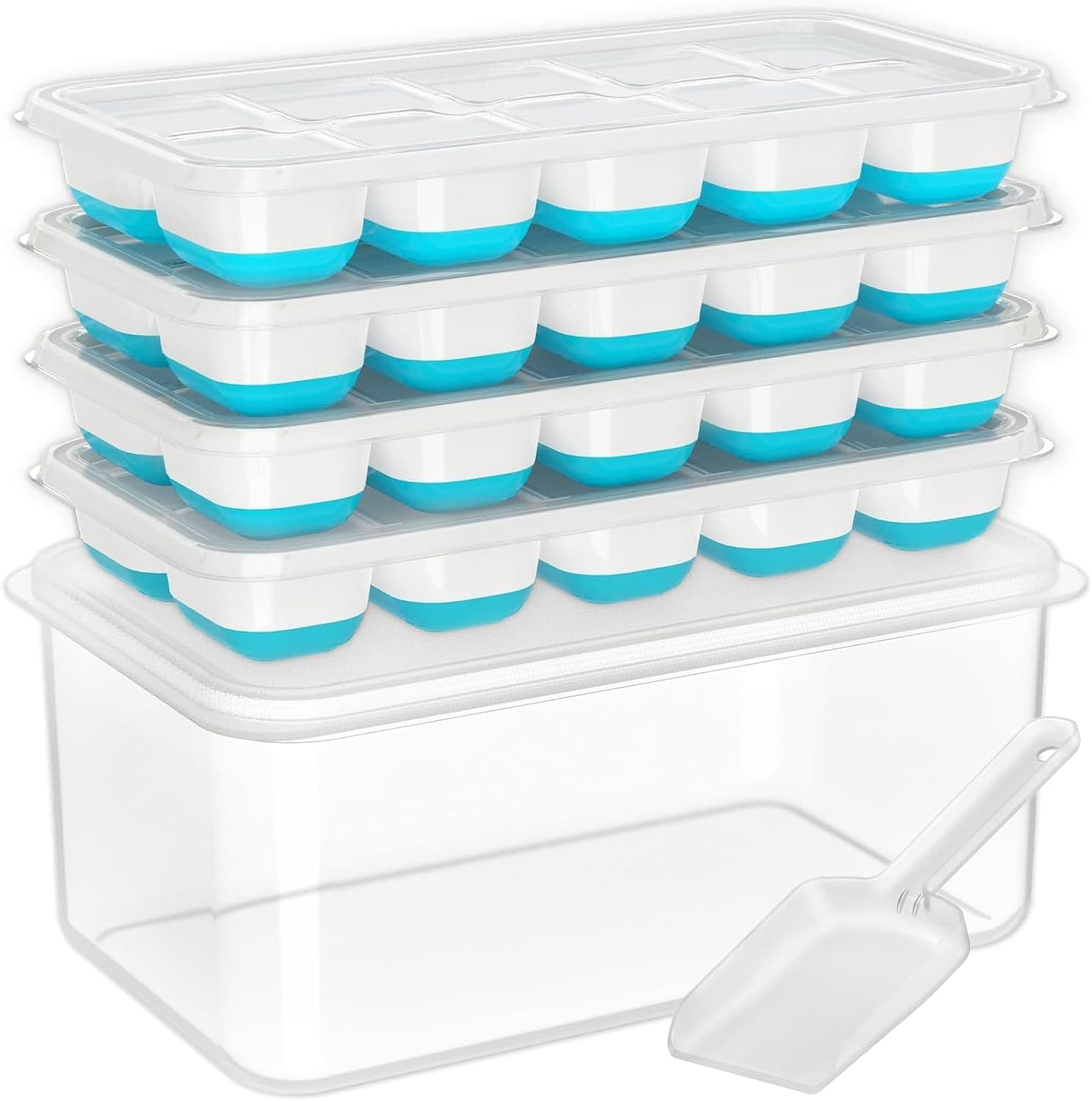
DOQAUS Ice Cube Trays with Lid & Bin, 4-pack

DOQAUS

DOQAUS Ice Cube Trays with Lid & Bin, 4-pack

Four silicone trays with lids plus a bin and scoop, producing the standard cube that ten of the eighteen recipes on this site call for — more than large cubes and pebble ice combined, and eleven once you count the iced latte that takes either. Four trays plus a bin is also what makes a rotation possible, and freezing time rather than tray count is the real constraint on a home bar.

Best for
The default ice for this site — iced coffee, tea, lemonade, sodas, agua fresca
Key spec
Silicone, stackable with lids, bin and scoop included
  • Standard cubes suit ten of the eighteen recipes here, and fit a lidded to-go cup
  • Four trays keep a rotation going, which matters because a fill takes hours
  • Lids let the trays stack and keep freezer smells off the ice
  • The bin frees the trays to be refilled instead of storing finished ice
  • Standard cubes dilute faster than a large cube in a slowly sipped drink
  • Silicone trays flex, which makes carrying a full one to the freezer awkward
  • Four trays plus a bin needs real freezer-drawer space
View on Amazon

Technique behind this drink

Make it ahead, or batch it

The syrup can be made weeks ahead. The juice is the constraint: squeezed lemon juice loses its bright top note within a few hours and takes on a duller, faintly bitter edge, so squeeze it the same day. For holding times on the finished pitcher, use the cold-storage guidance linked from the batching page rather than judging by taste, since lemonade stays palatable well past the point it stops being fresh.

Citrus juice is what degrades, and it degrades on a clock rather than in proportion to volume — a gallon squeezed at ten in the morning is just as tired by three as a pint would be. That is the reason to prepare syrup and water ahead and add juice as late as possible, rather than making the whole thing the night before. The second scaling issue is that acidity is not additive in the way sweetness is: six lemons vary enough between them that a quadrupled batch made from twenty-four lemons will land somewhere different from four single batches. Mix the juice for the whole batch together first, then taste it before it meets the syrup, and adjust the syrup rather than the juice.