Skip to content
POURCRAFT BAR

BLENDED FRUIT

Watermelon Agua Fresca

Four parts blended watermelon to one part water, strained once, with lime doing the work that sugar usually does.

  • 4Watermelon flesh76%8 cups, cubed
  • 1Cold water19%2 cups
  • 1/4Lime juice5%1/2 cup
Ice
Standard cubes
Glass
Tall 16 oz glass
Serves
6
Garnish
A sprig of mint and a lime wheel

Ingredients

Batch size

6 servings
  • 8 cupswatermelon flesh, seeds removed, cut into rough cubesSwap: Cantaloupe, which is milder and wants more lime
  • 2 cupscold water
  • 1/2 cuplime juice, freshly squeezed
  • 2 tbspsimple syrup, only if the melon is under-ripe
  • 1small handful of mint, for the glasses

Method

  1. Taste the melon before you decide on sugar

    A ripe watermelon in season needs no sweetening at all and a pale one needs a little. This is the only judgment call in the recipe and it has to happen before blending, not after.

  2. Blend in short bursts

    10–15 seconds

    A few seconds is enough to liquefy melon. Running the blender for a minute whips air into it, and the aerated foam that forms on top separates into an unappealing pink scum within the hour.

  3. Strain through a coarse sieve, not a fine one

    You are removing fiber and stray seed fragments, not clarifying. A fine sieve takes out the body that makes this taste like fruit rather than like flavored water.

  4. Add lime after straining

    Lime added before blending gets aerated along with everything else and loses its edge. Stirred in at the end, it stays bright and it is what stops the drink reading as flat and sugary.

  5. Chill it hard before serving

    At least 2 hours refrigerated

    Blending warms the fruit slightly, and this drink is unforgiving when it is merely cool. Give it time in the refrigerator rather than trying to fix it with more ice in the glass.

The one thing that ruins it

Blending the melon with ice to save chilling time. The ice melts into the drink immediately and you get a pale, thin agua fresca that tastes diluted from the first glass rather than the last.

Tools you actually need

  • Cups & Lids

    Decides serving away from the counter without leaks.

  • Ice Trays & Molds

    Decides ice shape and size, which controls dilution.

  • Straws

    Decides matching bore size to drink thickness.

If you need one

01Best seal
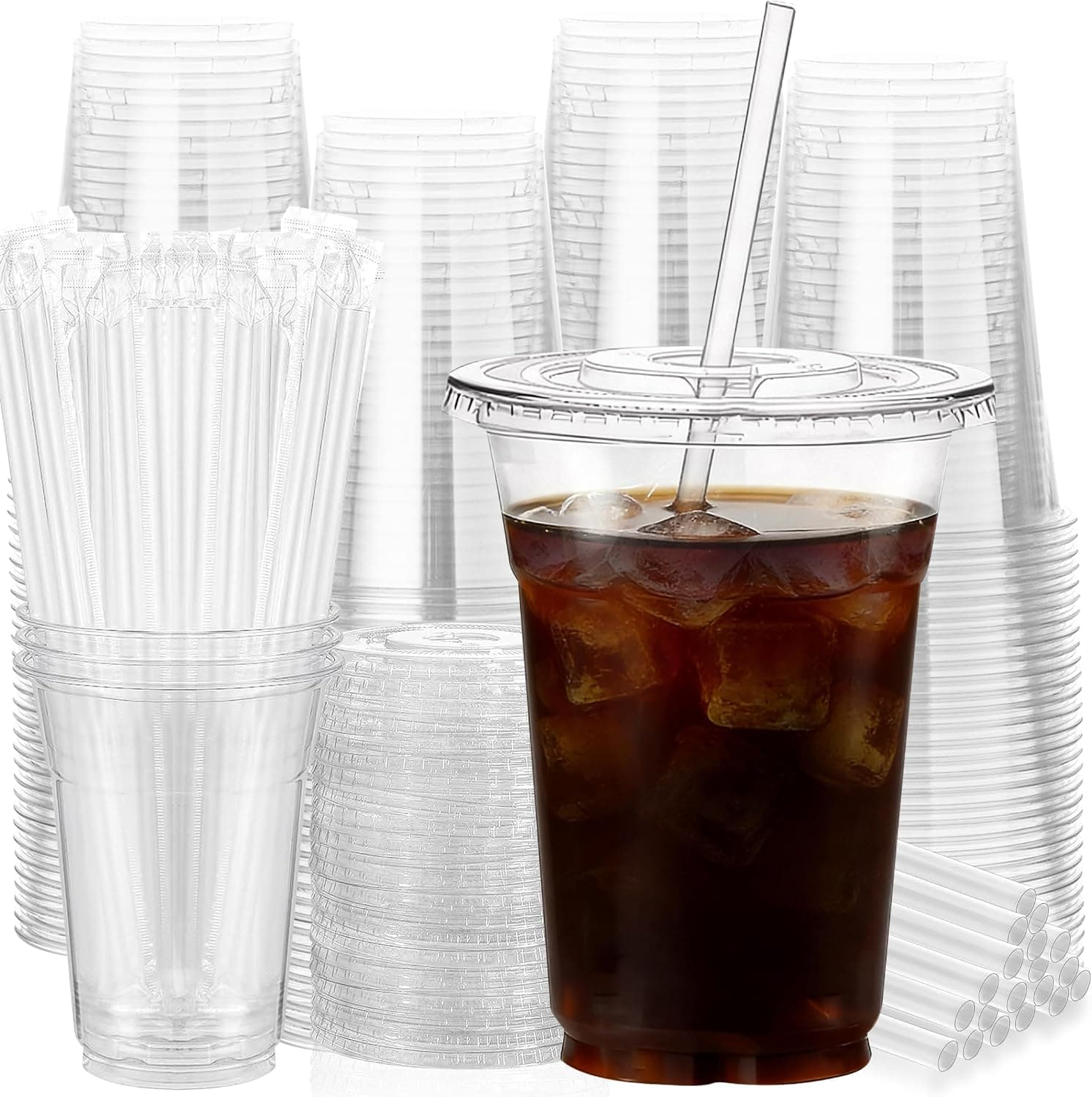
Leak-Proof 16 oz Cups with Lids & Straws, 100 pack

Leak-Proof 16 oz Cups with Lids & Straws, 100 pack

The only set here described as leak-proof rather than leak-resistant, and listed for bubble tea, which implies a lid seal built for a cup that gets carried and shaken. Sealing is precisely the job this category exists to do.

Best for
Drinks that leave the room, get carried, or ride in a bag
Key spec
16 oz, BPA-free, leak-proof lids, straws included, 100 pack
  • Described as leak-proof rather than the weaker leak-resistant
  • Bubble tea use implies a lid rated for real movement
  • Cups, lids and straws matched, so nothing has to be sized by hand
  • BPA-free per the listing
  • A tighter seal usually means a lid that is harder to get on
  • Single-use plastic in a 100 pack
  • No stated wall thickness or rigidity
View on Amazon

Technique behind this drink

Make it ahead, or batch it

This is best made the same day it is drunk. Blended melon separates into a pale layer over a denser one within a few hours — a stir fixes the appearance but not the slightly stale note that comes with it. For holding times, use the cut-produce guidance linked from the summer station page; blended fruit should be kept cold and treated as a perishable rather than as a shelf-stable drink.

The thing that breaks at volume is aeration in the blender. A jug filled to the brim needs longer to move everything past the blades, and that extra running time is exactly what whips air in and produces the foam layer. Blend in batches no more than two-thirds full, and pour each one straight through the sieve rather than accumulating blended fruit in the blender jug. The lime is the second issue: it should be added to the combined, strained batch at the end and adjusted once, because melons vary far more in sweetness than lemons vary in acidity, and correcting per-batch leaves you with six slightly different drinks.