Skip to content
POURCRAFT BAR

CITRUS

Zesters & Citrus Tools

What this category decides: getting oil off a peel without pith.

What this actually decides

Most of what people taste in a citrus drink is smell, and most of that smell is oil held in the colored outer layer of the skin. Directly beneath it is the white pith, which carries no aroma at all and a great deal of bitterness. The entire job of this category is separating those two layers reliably, and a sharp blade at a controlled depth is how it is done.

There are two distinct tools inside that job, and one will not do the other. A fine zester takes shreds for the surface of a finished drink. A wide strip for expressing — the thing you squeeze over a glass to spray oil across the top — comes off a Y-peeler, not a zester. Most home bars only own the first and wonder why the drink smells of nothing.

How to choose

Choosing zesters & citrus tools
What to look forWhy it matters
Blade sharpnessA sharp blade cuts the colored layer and stops. A dull one has to be pressed, and pressing is exactly how the white layer underneath comes along with it.
Stainless gradeCitrus is acidic and it sits on the blade while you work. 18/8 and 304 are both stated on listings here and both resist the pitting and staining that shows on cheaper steel.
A blade coverA fine grater blade stored uncovered is a hazard every time you reach past it, and on a cart or an open shelf that is several times a day. The cover is what makes open storage sensible.
Handle shapeThis job is done at a shallow angle with light pressure over a curved surface. A handle you can control beats one you have to grip, and grip is what pushes the blade into the pith.
One blade or severalA single fine blade covers zest. A multi-piece set adds coarser profiles that are more useful for garnish, at the cost of three times the storage and three uncovered edges.

The lineup

  • 01Cleanest cut
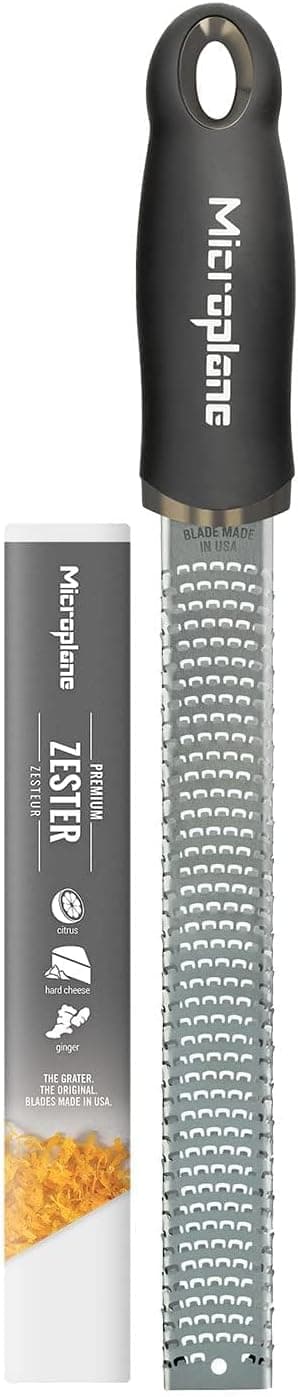
    Microplane Premium Classic Zester & Grater

    Microplane

    Microplane Premium Classic Zester & Grater

    An 18/8 stainless blade with a soft handle, the reference tool for this job. A sharp photo-etched blade cuts the colored layer and stops, which is exactly the behavior the category exists for: oil without pith.

    Best for
    Fine zest over the surface of a finished drink
    Key spec
    18/8 stainless steel blade, soft handle, citrus and hard cheese
    • Sharp enough to take the colored layer without pressing into the pith
    • 18/8 stainless resists the staining that citrus acid causes
    • Soft handle gives control at the shallow angle this job needs
    • Equally at home on hard cheese, so it earns its drawer space
    • No blade cover listed, so it needs careful storage
    • A fine zester cannot take the wide strips that expressing calls for
    • One blade profile only, unlike a multi-piece set
    View on Amazon
  • 02Safest to store
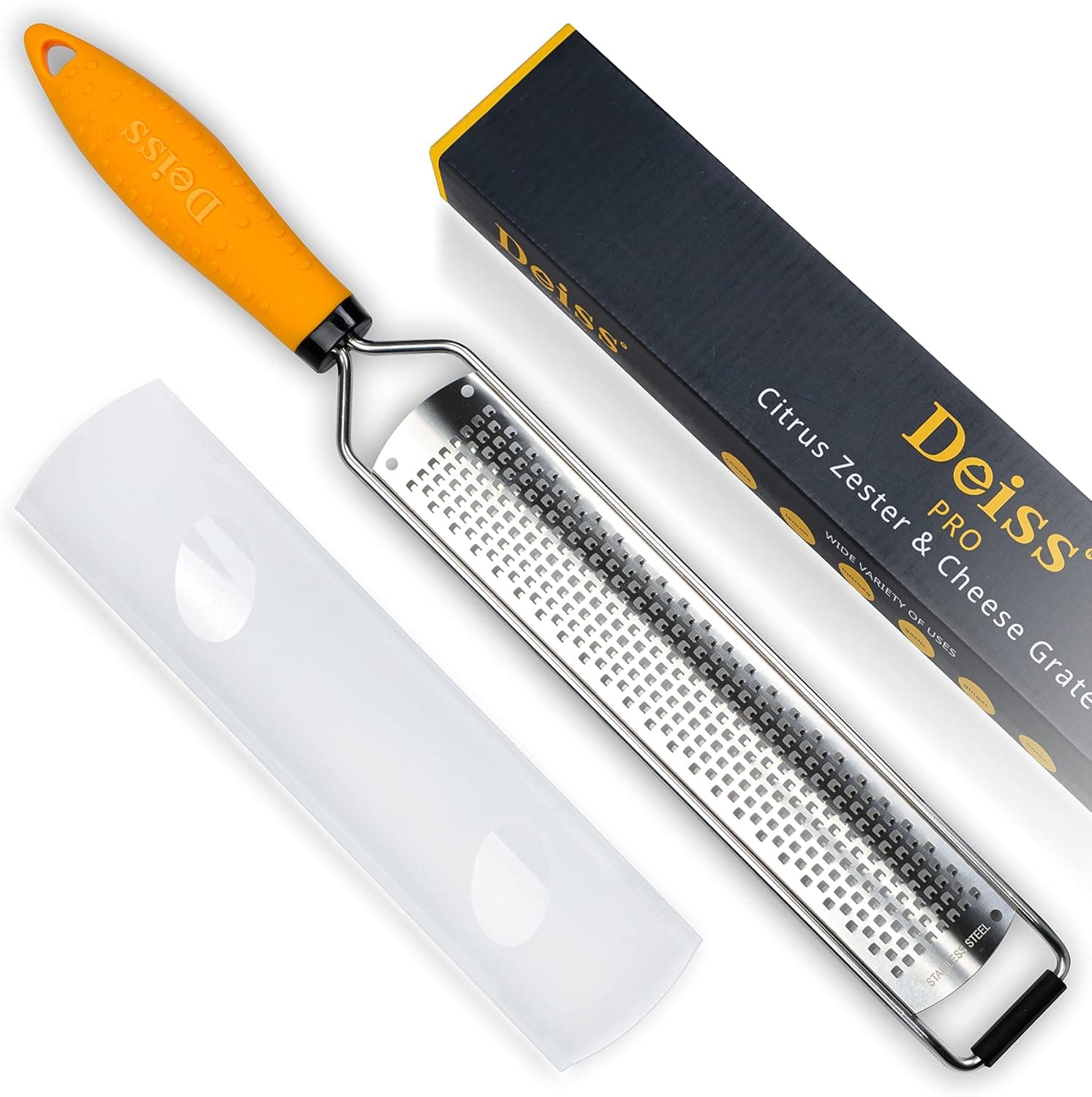
    Deiss PRO Citrus Zester & Cheese Grater

    Deiss

    Deiss PRO Citrus Zester & Cheese Grater

    A razor-sharp stainless blade that ships with a protective cover and is listed as dishwasher safe. The cover is the reason to prefer it on an open station or a cart, where anything uncovered gets reached past several times a day.

    Best for
    Carts and open shelving where a bare blade is a daily hazard
    Key spec
    Razor-sharp stainless blade, protective cover, dishwasher safe
    • Protective cover makes open-shelf or cart storage sensible
    • Listed as dishwasher safe, unlike some fine blades
    • Stainless blade holds up against citrus acid
    • Same blade handles cheese, so it is not a single-use tool
    • Covers get separated from tools and then the safety benefit is gone
    • Fine profile only — no wide-strip capability
    • Dishwasher cycles dull fine blades faster than hand washing
    View on Amazon
  • 03Most blade options
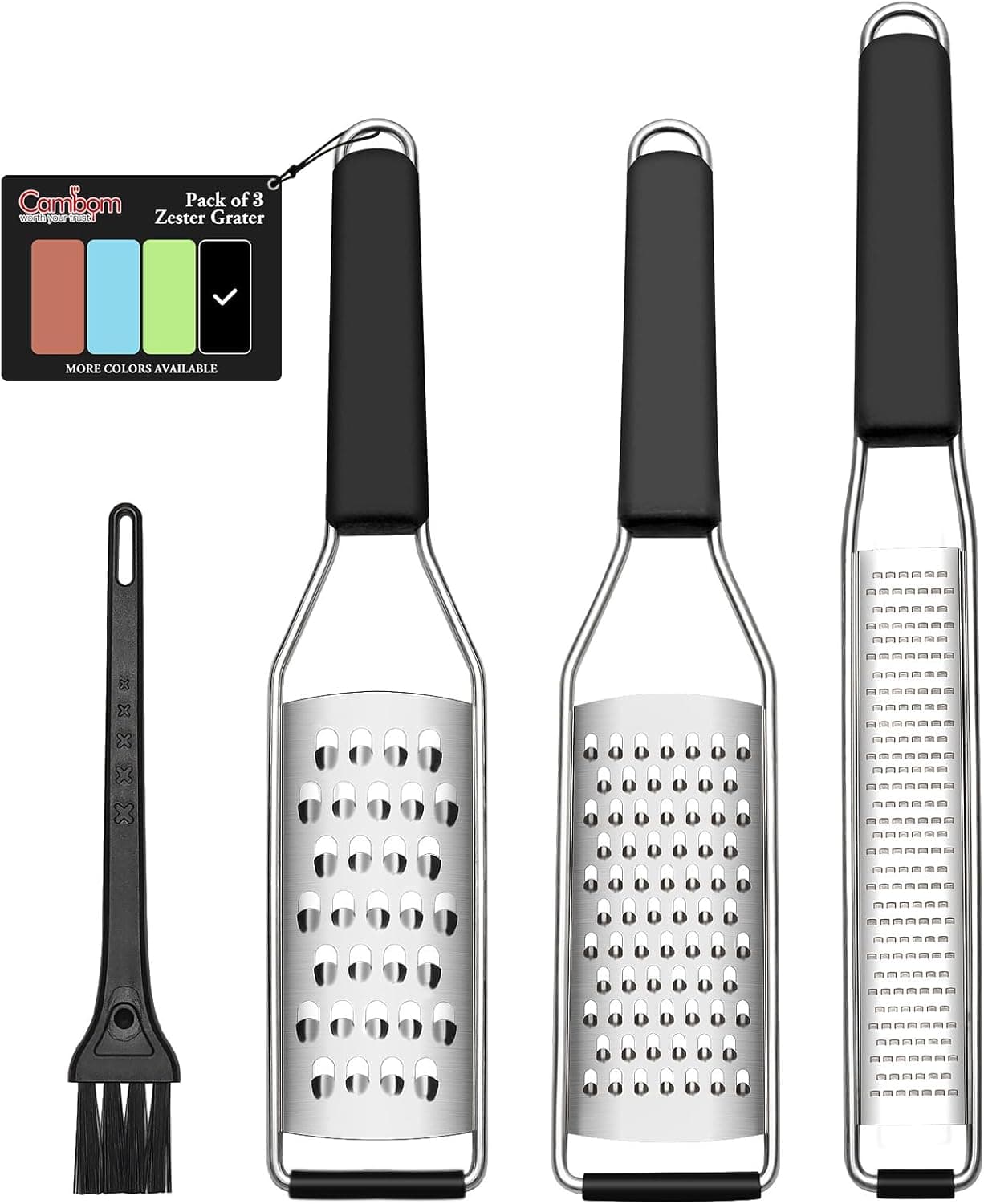
    Cambom Zester & Grater 3-Piece Set

    Cambom

    Cambom Zester & Grater 3-Piece Set

    Three blade types in 304 stainless, dishwasher safe. The coarser blades in the set are the ones that get closest to a wide strip, though a Y-peeler is still the right tool for expressing.

    Best for
    Stations that also do garnish prep and want more than one shred size
    Key spec
    304 stainless steel, three blade types, dishwasher safe
    • Three profiles cover fine zest through to coarser shreds
    • 304 stainless across all three pieces
    • Dishwasher safe as a set
    • Coarser blades are more useful for garnish than a fine zester alone
    • Three pieces take three times the storage of one tool
    • No covers listed for any of the blades
    • A set encourages using a coarse blade where a peeler belongs
    View on Amazon

Compared side by side

Zesters & Citrus Tools compared
ProductBest forKey featureMain drawbackLink
Microplane Premium Classic Zester & GraterFine zest over the surface of a finished drink18/8 stainless steel blade, soft handle, citrus and hard cheeseNo cover included, and a bare fine blade is a hazard in a drawerView
Deiss PRO Citrus Zester & Cheese GraterCarts and open shelving where a bare blade is a daily hazardRazor-sharp stainless blade, protective cover, dishwasher safeDishwasher-safe rating tempts a cycle that dulls a fine bladeView
Cambom Zester & Grater 3-Piece SetStations that also do garnish prep and want more than one shred size304 stainless steel, three blade types, dishwasher safeThree uncovered blades to store instead of oneView

Lifespan and care

A photo-etched blade stays sharp for years of household use if it is hand washed and stored covered. What kills them early is the dishwasher: repeated hot cycles dull fine teeth faster than any amount of zesting, even on models that are rated as dishwasher safe.

  • Rinse immediately, from the back of the blade forward, so the zest is pushed out rather than deeper into the teeth.
  • Hand wash even when the listing says dishwasher safe. The rating describes what survives, not what stays sharp.
  • Dry it straight away — citrus acid plus standing water is what starts pitting on the cheaper steels.
  • Store it covered, or in its own slot. A bare fine blade loose in a drawer is both a hazard and a way to dull it against other tools.
  • Zest before you juice. A juiced half is impossible to hold against a blade at a useful angle.

Drinks that need it

Stations that use it

Questions people actually ask

Zest is fine shreds of the colored layer, used on the surface of a finished drink where it stays. A peel is a wide strip of the same layer, cut with a peeler, that you squeeze over the glass to spray oil across the top and then usually drop in. They are different tools and different effects, and a zester cannot produce the second one.

Use a sharp blade and let it do the work instead of pressing. Then look at the back of what you took: if there is white on it, trim that away with a knife laid flat. That two-second check is the whole technique, and it is the step nearly everyone skips.

Yes. You are about to use the outside of the skin as an ingredient, so it gets the same treatment as anything else eaten unpeeled. Dry it afterward as well — a wet peel sprays water along with the oil when you squeeze it.

Not usefully. Cut edges dry within a few hours and the oil yield falls off sharply, so a peel prepared the night before looks perfect and gives you almost nothing when you squeeze it. Citrus wheels and wedges hold overnight; anything cut for its aroma should be done within a couple of hours.

Yes, and it is one of the clearer cases on this site. A box grater has no shallow setting — it tears rather than slices, takes pith with the zest, and produces a wet paste rather than dry shreds. If you make citrus drinks at all, this is a small purchase that changes the result.